Highlights
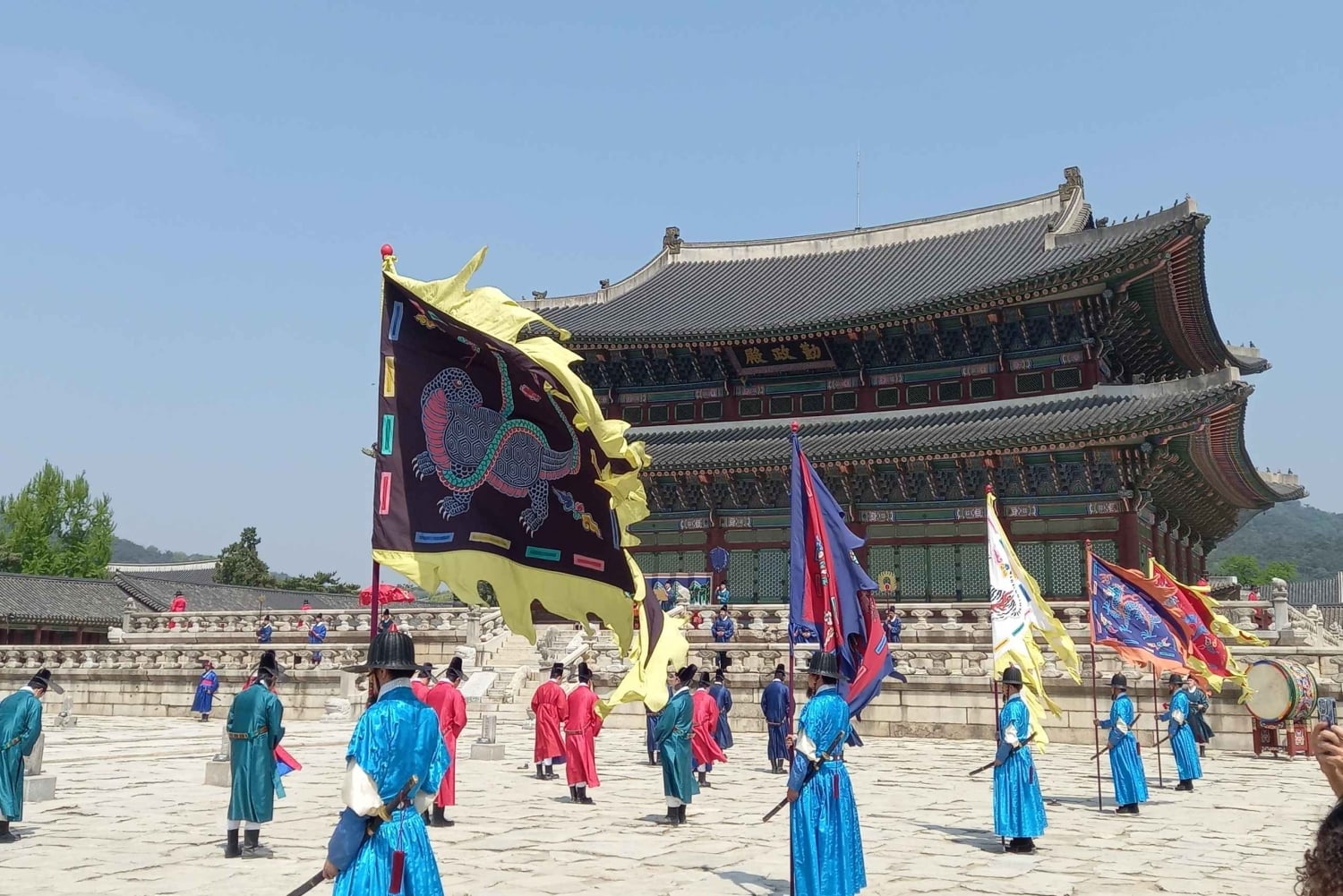
- Gyeongbokgung is highlight & essence of traditional Korean culture
- Jongmyo is Royal Ancestral Shrine, listed as UNESCO World Heritage
- Seonjeongneung is Royal Tombs of Joseon Dynasty, listed as UNESCO World Heritage
- COEX - Star Filed library and Gangnam style statue
- Bongeunsa Buddhist Temple is beautiful place, showing old with new landscape
Description
Tour exploring of Korea's monumental architectures & essence of traditional culture along with fascinating modern metropolitan landscape of Seoul Gangnam area.
'Gyeongbokgung palace - Jongmyo Shrine - Seonjeongneung Royal Tombs - COEX - Bongeunsa Temple'
Confucianism is Korea’s cultural identity!
Joseon Dynasty was the only Confucianism fundamental country in world.
In accordance with Confucian national ideologies, Joseon Dynasty created three distinct, sacred spaces for its kings.
1st one is Jongmyo Shrine, where the spirits tablets of deceased kings reside;
2nd one are the Royal Tombs, where the bodies of the deceased kings are buried,
3rd one is Gyeongbokgung Palace, where the living kings resided and managed state affairs.
1. Gyeongbokgung is the most beautiful place and must-see architecture in Korea. Gyeongbokgung was built in 1395 as main palace and monumental architecture of Joseon Dynasty that embodies Confucianism. Gyeongbokgung is grandest palace & the only palace built on standard palace structure of Confucianism.
2. Royal Ancestral Shrine and Tombs of Joseon
The Royal Tomb of Joseon and Jongmyo Shrine are Korea's UNESCO World Heritage sites, and are monumental heritages, where philosophical ideologies of Confucianism are combined with architecture and art.
Based on Yin Yang theory, human life consists of body, spirit and soul. Spirit governs the mind of human. Soul governs body of human. Human lives while they have soul & spirit in their body together. When a person dies, spirit & soul go out of body. Death means the breakup of spirit & soul.
In Confucian culture, tomb for the body and shrine for the spirit were built together to realize ancestor worship, central value of Confucianism.
Royal Tombs & Jongmyo Shrine were designed to set an example for the practice of ancestor worship, to present royal legitimacy and dignity of Joseon Dynasty and to make the wish for eternity of royal lineage.
1). Jongmyo – Royal Ancestral Shrine:
Jongmyo is one of supreme monumental architecture of Korea, characterized by highly refined simplicity minimizing color and decoration, to create piety and solemnity.
Jongmyo is Royal Ancestral Shrine where spirit tablets of kings and queens of the Joseon are enshrined and descendants perform ancestor memorial services.
2). Seonjeongneung - Royal Tombs of Joseon Dynasty
40 Royal tombs of Joseon are designated as UNESCO World Heritage Sites. Royal Tombs of Joseon represent the world view and architectural features of the time through their harmony with nature and elaborate arrangements.
Royal Tombs show unique architectural and landscaping styles and sculptures with supreme aesthetics and artistic value created by the best craftsmanship of the time.
Seolleung and Jeongneung are Royal Tombs are located next to COEX in Gangnam, Seoul. They are the royal tombs of 9th King Seongjong and 11th King of Joseon Dynasty.
3. COEX – Star Filed Library and Bongeunsa Buddhist Temple
Includes
1. Guide fee for 8 hours tour
2. Entry tickets to Gyeongbokgung palace, Jongmyo Royal Shrine and Royal Tombs
Excludes
1. transportation cost moving from place to place
2. Food, drink, beverage
3. Insurance
4. Tips for the guide
Important Information
- Request for reservation in advance and confirmation of guide.
Easy cancellation
Cancel up to 24 hours in advance for a full refund