Highlights
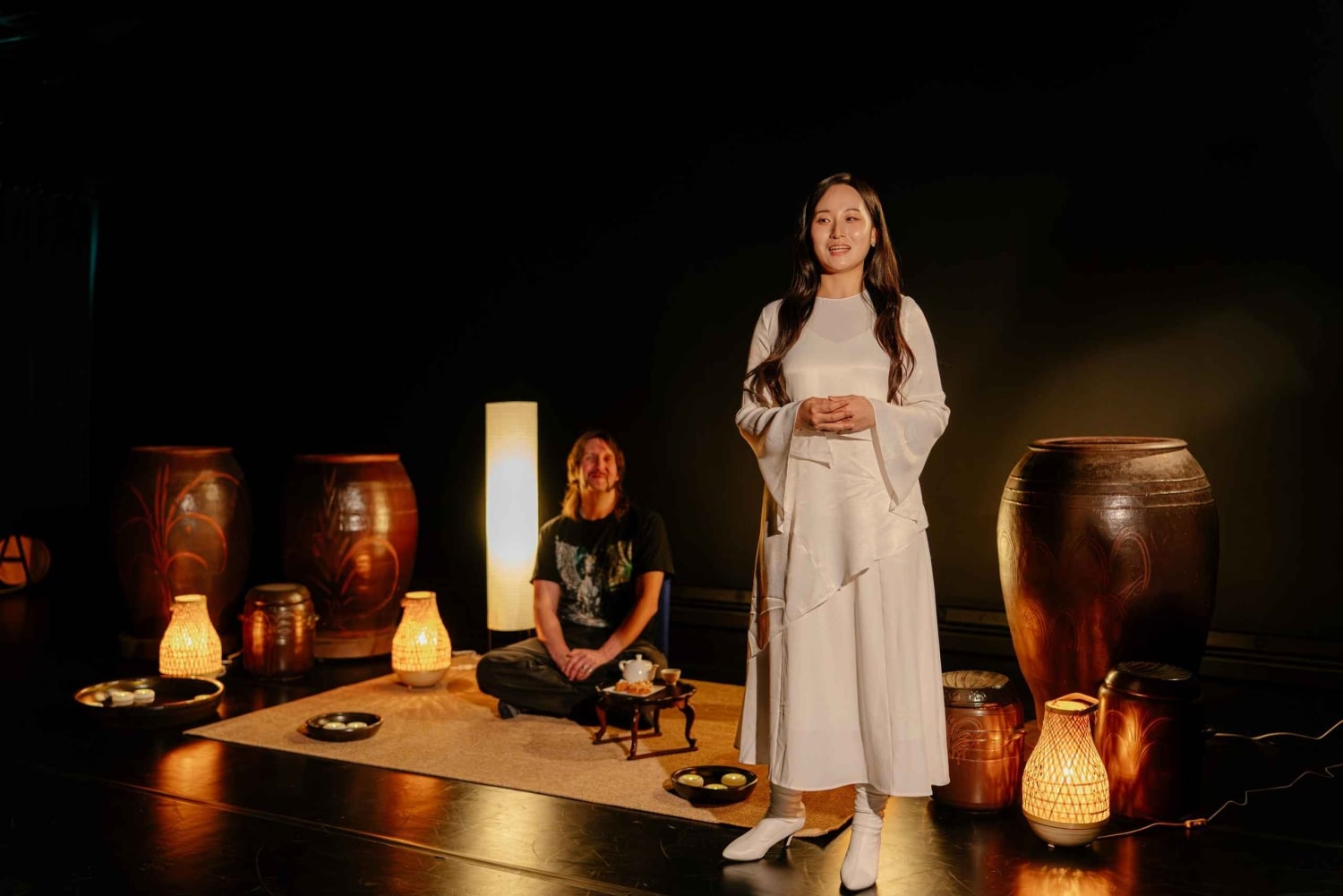
- • Experience a Joseon noble family's one-table-per-guest hospitality
- • A curated journey: White Room → Black Room → White Room
- • A performance for only 40 guests, unamplified with natural acoustics
- • a docent who is both interpreter and storyteller
- • Hanbok experience and hands-on traditional instrument experience
Description
White Room — Entrance to the Performance
On the 9th-floor lounge, a Korean traditional welcome drink awaits, with a multilingual program and artist photo cards. A small exhibition traces the making of the performance. Stay at your own pace. Through the side window: central Seoul and the edge of its old city wall.
Black Room — The Salon Performance
A Joseon noble family's one-table-per-guest hospitality
Joseon noble families set out a separate table for each esteemed guest — the deepest form of Korean hospitality.
A performance for only 40 guests, with natural acoustics and no microphones
Watch from a distance close enough to feel the artist's breath.
Korean traditional performance was originally a place of conversation — where the audience spoke with one another and exchanged calls of encouragement. The Onggi Concert follows that rhythm: music and conversation alternate. Share a quiet word with your neighbor over drink — a moment to set aside Western-style formalities.
Today's artists have walked a single path for over twenty years. Experience one voice, or one body of movement, at close range.
Programs vary by season. Each season includes a Korean traditional culture experience.
• Jul 2 – Aug 13 | Pansori (UNESCO Intangible Cultural Heritage) — Simcheongga
• Oct 7 – Dec 9 | Yeonhui — Korean traditional folk performance or Korean traditional dance
The Docent — A Companion by Your Side
Our docent is a host and storyteller by your side, carrying the meaning of Gwangmudae, Joseon hospitality, today's artists, the pansori repertoire, and the points worth noticing. An aesthetic companion helping you discover Korean traditional art for yourself.
Gwangmudae After 96 Years
A century ago, a theater called Gwangmudae (光武臺) stood in this same Dongdaemun district — a stage that held thirty years of Korean traditional performance. Lost to a fire in 1930, after 96 years it returns to the same ground. The Onggi Concert carries that spirit forward. Its name comes from onggi, traditional Korean earthenware slowly shaped and patiently fired.
9th Floor of a Market Building — A Hidden Stage
Take the elevator to the 9th floor of Dongdaemun General Market's New Wing (Building N), and Gwangmudae reveals itself the moment the doors open — a space hidden like a treasure within a single market floor. After booking, we send a 60-second video showing the way
After the Performance — Back to the White Room
Try wearing hanbok.
You may also try a gat (a Joseon-era brimmed hat for men) or a jokduri (a small ceremonial crown for women). Take a photograph with central Seoul as your backdrop.
Touch the gayageum and the drum.
Play Korea's traditional instruments — the gayageum and the drum — for yourself.
A small gift for some guests.
Just outside, the 600-year-old Seoul City Wall path begins nearby. If time allows, we recommend a visit (no separate guidance).
Includes
Premium reserved seating (choice of floor seating or tiered seating at booking)
Docent inside the Black Box theater (host and narrator)
White Room welcome drink (Korean traditional drink)
Multilingual program note and access to the production process exhibition
50-minute Korean traditional performance
Individual table service: Korean traditional drink + Korean traditional sweets
Knee blanket for floor seating
Hanbok experience after the performance (including gat and jokduri)
Traditional instrument experience (gayageum and drum)
A small gift for some guests
60-second arrival guide video sent in advance
Excludes
Parking, sign-language interpretation, wheelchair access not available
Easy cancellation
Cancel up to 24 hours in advance for a full refund